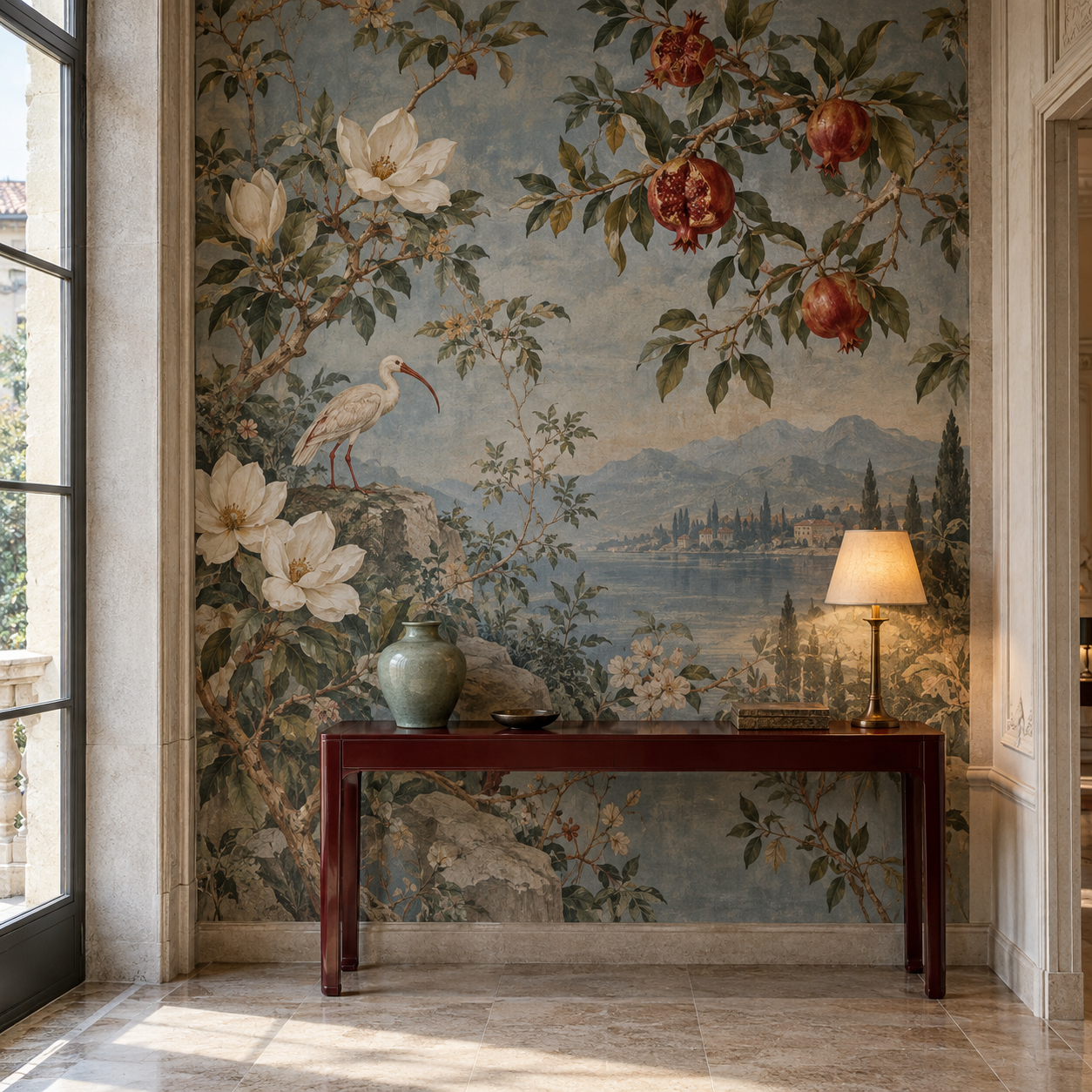
Panoramic Dreams: The Unfolding Story of Scenic Wallpaper
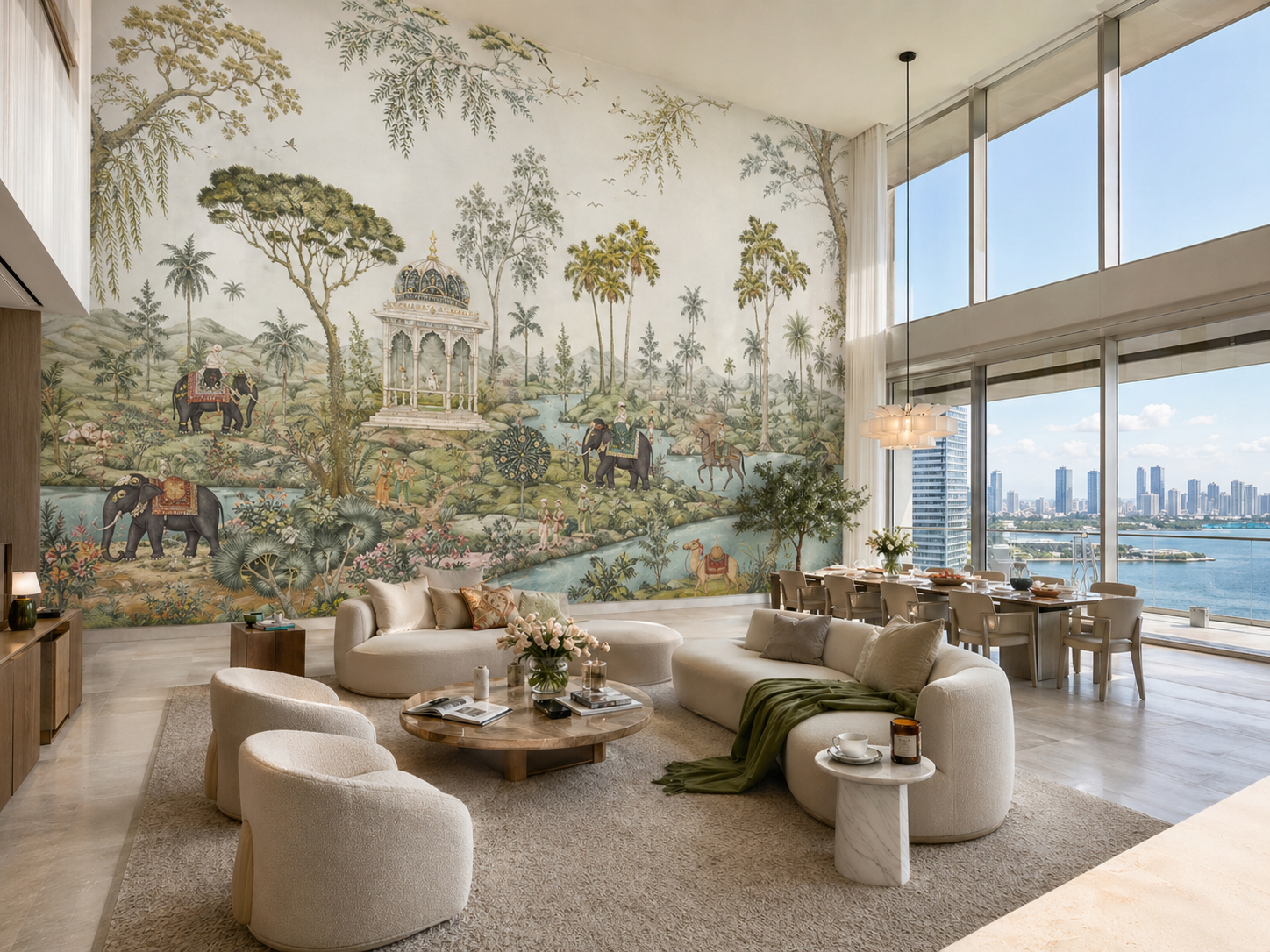
Imagine walls dissolving into breathtaking vistas – tropical idylls, Alpine heights, or the vibrant life of distant continents. This is the transformative magic of scenic wallpaper, or papier peint panoramique, an art form largely born and perfected in France, reaching its zenith between approximately 1790 and 1865. More than mere decoration, these expansive murals were, and remain, immersive experiences, a uniquely European specialty reflecting a cultural fascination with travel, nature, and the allure of the exotic brought directly into the heart of the most sophisticated homes. They offered, quite literally, the world within one’s walls.
The Dawn of the Panorama: French Innovation and Imagination
The emergence of scenic wallpaper in late 18th-century France was fueled by both technical ingenuity and the intellectual currents of the age. While England led in early wallpaper developments like flocking and efficient block printing for patterns, France took the ambitious leap into large-scale narrative scenes. Innovations like joining paper sheets into continuous rolls and advancements in colour printing – including subtle techniques like irisage to create naturalistic sky gradients – made these grand projects feasible. This coincided with the era of “philosophical travel” and burgeoning Romanticism. Explorers revealed global wonders, while thinkers ignited a desire for understanding different cultures and embracing the sublime power of nature. Scenic wallpaper became the ultimate medium to satisfy this curiosity, offering a domestic form of exoticism and escape – a journey undertaken without leaving one’s salon.
Masters of the Scene: French Artistry Takes Flight
The golden age of the papier peint panoramique was defined by visionary French manufacturers. Joseph Dufour captivated audiences with early masterpieces like Sauvages de la Mer Pacifique (Savages of the Pacific Sea, 1804), designed by Jean-Gabriel Charvet, bringing Captain Cook’s voyages vividly into Parisian homes. Simultaneously, manufactures like Zuber & Cie utilized intricate woodblock printing, employing thousands of hand-carved blocks for a single panorama, to create iconic works such as the spectacular Vues du Brésil (Views of Brazil, 1830). These French houses, through exceptional artistry and demanding techniques, cemented France’s global leadership in this luxurious and immersive art form, creating wallcoverings destined for prestigious settings.
Iconic Installations: Scenes Gracing Storied Walls
The allure of these French panoramas graced the most elegant interiors, becoming coveted symbols of status and taste. Within France, grand hôtels particuliers in Paris and distinguished châteaux provided the perfect canvases for these immersive scenes. For instance, the Château de Malmaison, famously associated with Empress Joséphine, featured Dufour’s work, reflecting the imperial taste for exoticism and neoclassical themes. Similarly, the Château de Groussay, later renowned for its influential mid-20th-century interiors by Charles de Beistegui, showcased historic panoramic papers, demonstrating their enduring appeal across generations. While many original private installations are lost to time, surviving examples in historic properties and museums like the Musée des Arts Décoratifs offer glimpses into the opulent world these wallpapers created, underscoring their role as defining elements of French interior heritage.
England’s Enduring Contribution: Pattern and Craft
While France reigned supreme in the narrative panoramic, England carved its own distinct path of excellence in wallpaper design. Building on its early manufacturing prowess, the 19th century saw the rise of influential English designers and movements. Notably, the Arts & Crafts philosophy, championed by William Morris, emphasized stylized natural forms, intricate patterns, and artisanal quality. Morris & Co.’s designs, though different in aesthetic from the French scenics, represented a parallel commitment to elevating wallpaper into a sophisticated art form, profoundly influencing decorative tastes across Europe and establishing a lasting legacy in pattern design.
Evolution and Enduring Allure of the Scenic
The French scenic genre itself evolved. While initial works often aimed for a degree of ethnographic or topographical accuracy, later panoramas embraced more purely decorative or dreamlike compositions, prioritizing atmosphere over reportage. Some designs captured the pulse of modernity, while others retreated into fantastical Edens. Though the eventual rise of photography offered a different, more literal window onto the world, the unique artistic appeal and immersive power of hand-crafted scenic wallpaper endured, valued for its painterly quality and transportive effect.
Conclusion: A Legacy Reimagined
The great scenic wallpapers of the 19th century represent a pinnacle of European decorative arts – a fusion of technical skill, artistic vision, and cultural curiosity, dominated by French innovation in the panoramic form. They offered not just decoration, but immersion; not just views, but voyages of the imagination. Today, this legacy is cherished and dynamically reinterpreted by houses that understand the profound impact of transforming walls into worlds. Brands like Ananbô, drawing inspiration from this rich history and the specific allure of 19th-century French panoramas, continue the tradition, reviving the spirit of immersive, artistic wallcoverings for today’s most sophisticated luxury interiors.