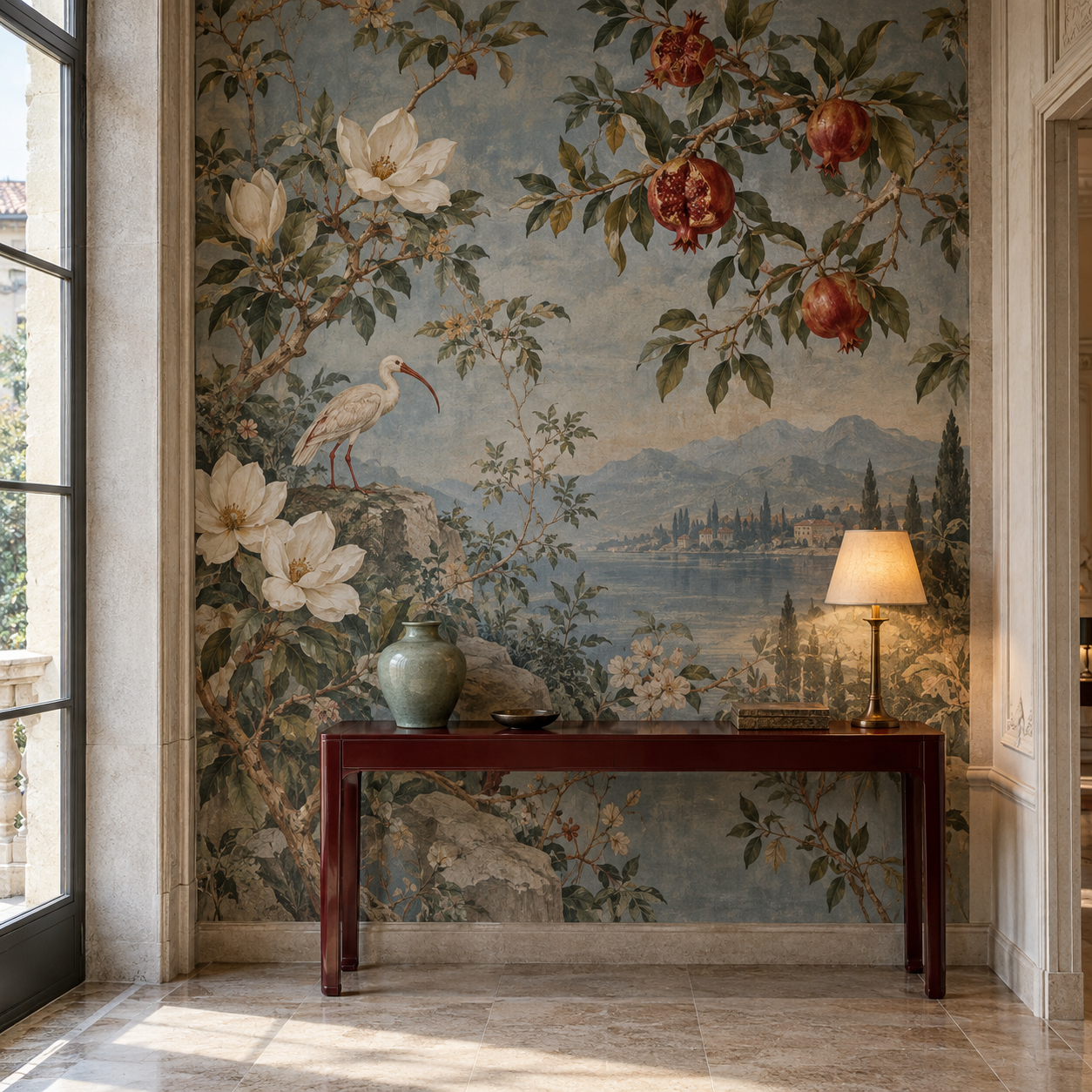
The Artful Deception: Why Trompe-l’œil is the Ultimate Intellectual Chic in Wall Design
By Seraphina Bellweather
There is a particular, delightful shiver that runs down the spine when confronted with truly masterful trompe-l’œil. It’s a moment of delicious cognitive dissonance, a playful tug-of-war between what the eye perceives and what the intellect knows to be true. A flat wall suddenly recedes into an imaginary colonnade; a painted sky promises eternal sunshine where a ceiling once was; a seemingly carved stone acanthus leaf reveals itself, upon closer inspection, to be nothing more than exquisitely applied pigment on paper. This, my friends, is not mere trickery. It is trompe-l’œil – literally, to “deceive the eye” – an art form with a lineage stretching back millennia, and one that, in its most sophisticated iterations, represents the ultimate expression of intellectual chic in luxury wall design. It’s a knowing wink, a shared secret between the artist and the admirer, a testament to skill so profound it can conjure reality from artifice.
Ancient Illusions & Renaissance Realities: A Brief History of Deceiving the Eye
The human fascination with illusionistic art is hardly new. One only has to wander the excavated villas of Pompeii to witness walls dissolved into vibrant garden frescoes or elaborate architectural fantasies, designed to expand modest spaces and transport inhabitants to idealized worlds. These ancient artists understood the power of perspective, the magic of feigning depth where none existed. But it was during the Italian Renaissance that trompe-l’œil truly ascended to an art of breathtaking intellectual ambition. Masters like Andrea Mantegna, with his oculus in the Camera degli Sposi in Mantua, or Veronese, whose sprawling painted narratives seamlessly blended with actual architecture, didn’t just paint scenes; they shattered the perceived boundaries of space. They employed rigorous understanding of perspective and foreshortening not merely to delight, but to convey power, divinity, and the boundless reach of human creativity. This was illusion as a demonstration of intellect, a visual treatise on the nature of reality itself.
Wallpaper as Window: French Papiers Peints and the Democratization of Grandeur
How, then, did this grand tradition of mural illusion, often executed in demanding fresco or oil, find its way onto the more intimate and accessible medium of wallpaper? For that, we turn primarily to 18th and 19th-century France, the undisputed cradle of luxury wallpaper. Visionary fabricants and dominotiers began to explore the potential of papiers peints not just for repeating patterns, but for creating sophisticated decorative schemes that mimicked far more expensive materials and architectural treatments. Exquisite grisaille panels emerged, depicting classical statuary or bas-reliefs with such skill that they appeared three-dimensional. Faux marble, intricately painted wood grain (faux bois), sumptuous illusionistic draperies, and elaborate architectural mouldings – all rendered on paper – brought an air of aristocratic grandeur to a wider, albeit still affluent, clientele. Houses like Réveillon, and later Dufour and Zuber & Cie (though the latter is more famed for its scenics, it also produced remarkable trompe-l’œil borders and architectural elements), excelled in this artful deception. These weren’t just wallpapers; they were carefully constructed illusions, transforming ordinary rooms into spaces of imagined architectural significance.
The Intellectual Game: Why Trompe-l’œil is Perennially Chic
The enduring appeal of trompe-l’œil in sophisticated interiors lies in its inherent intellectual engagement. It’s a delightful game played between the artist’s skill and the viewer’s perception. The initial surprise, the double-take, gives way to a deeper appreciation of the cleverness, the sheer audacity of the illusion. It’s not about being truly fooled in the long term; rather, it’s about acknowledging and admiring the artifice. To commission or live with fine trompe-l’œil is to signal a certain visual literacy, a connoisseurship that values wit and ingenuity as much as overt beauty. It’s a subtle nod to those who understand the history of art and design, an unspoken acknowledgment of a shared appreciation for the sophisticated jest. This is why it remains perennially chic – it’s decoration that engages the mind, prompting more than just a passing glance. It invites contemplation, a smile, a moment of marvel at the human capacity to transform the mundane into the magical.
Masters of Illusion: Reviving the Art of Deception in Contemporary Interiors
While its historical roots are deep, trompe-l’œil is far from a relic of the past. Contemporary designers and luxury brands continue to explore its possibilities, often with a fresh, modern sensibility. One might see the exquisite, almost hyper-realistic, hand-painted faux bois or marble finishes by contemporary artisans who have dedicated their lives to these specialized techniques.
Luxury wallpaper houses often incorporate subtle textural illusions that hint at three-dimensionality; Pierre Frey, for instance, might offer a wallpaper that mimics woven fabric or aged plaster with uncanny realism, playing with the viewer’s expectation of material.
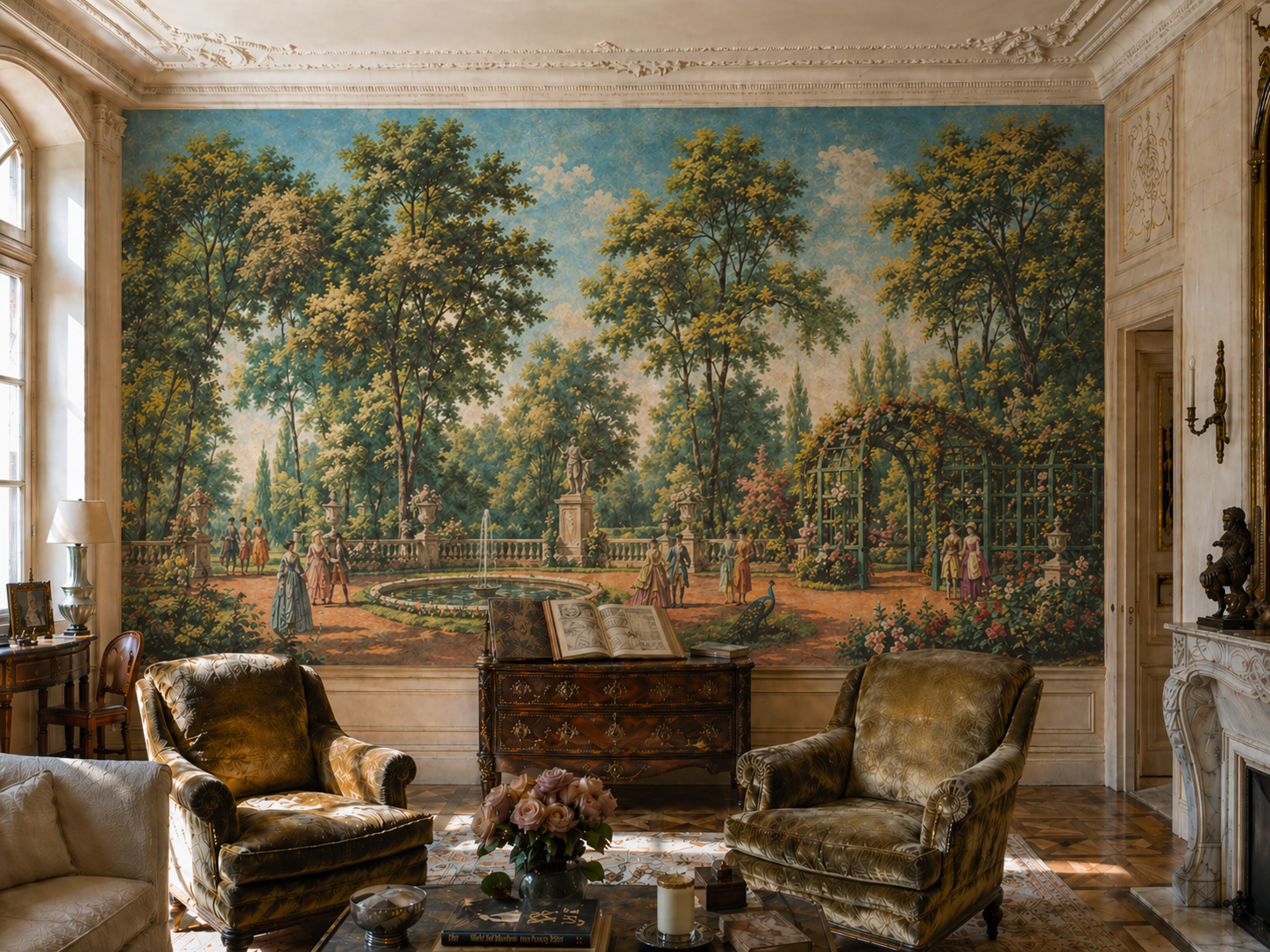
Nobilis too, with its sophisticated explorations of texture and innovative materials, often borders on the illusionistic. Even the immersive panoramic landscapes of a house like Ananbô, while not strictly trompe-l’œil in the classical sense, share that spirit of artful deception, their atmospheric depth and painterly qualities tricking the eye into perceiving boundless vistas where solid walls reside. The tradition also continues in bespoke commissions, where designers collaborate with artists to create entirely unique illusionistic schemes, from faux libraries to imagined architectural extensions, perfectly tailored to a client’s vision and the specific character of a space.
The Alchemist’s Palette: Unveiling the Techniques of Deception
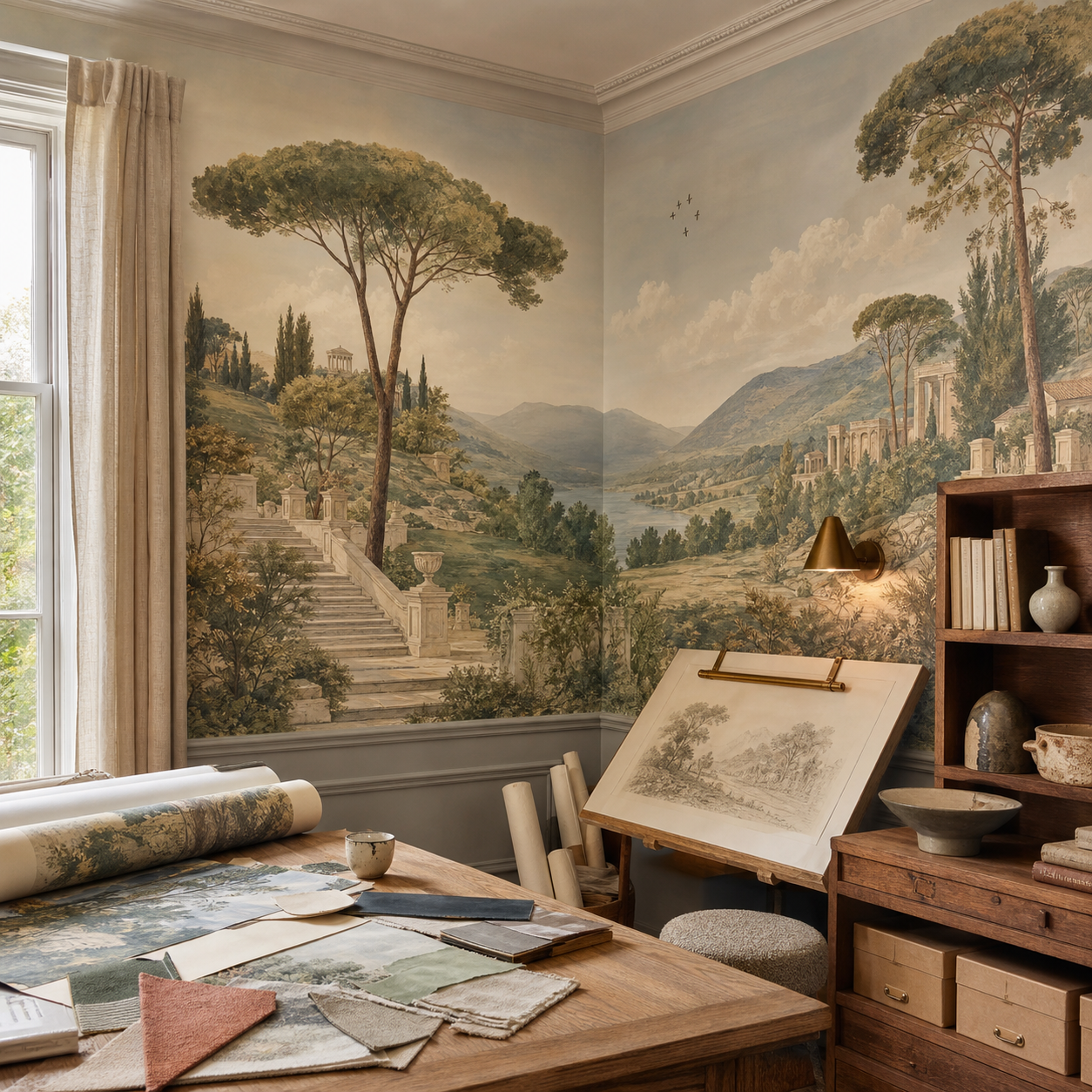
As a conservator, I find endless fascination in the how – the specific techniques and materials that bring these illusions to life. Creating convincing trompe-l’œil, especially on paper, is a demanding craft. Grisaille, for example, requires an extraordinary command of light and shadow, using a monochromatic palette (typically shades of grey, but also sepia or other single hues) to model form and create the illusion of sculpture or relief. The pigments must be expertly mixed and applied to achieve those subtle gradations. Crafting faux marble (faux marbre) or faux wood (faux bois) involves layering translucent glazes, skillful dragging, and delicate veining with specialized brushes – techniques often passed down through generations of decorative painters. Perspective, of course, is paramount. Artists must understand its mathematical principles to create convincing recession or projection on a flat surface. The choice of paper or ground is also critical; its texture and absorbency will affect the final appearance of the painted illusion. It’s a meticulous science as much as an art, requiring patience, precision, and a profound understanding of how light interacts with surface and pigment.
Conclusion: The Enduring Delight of Being Beautifully Fooled
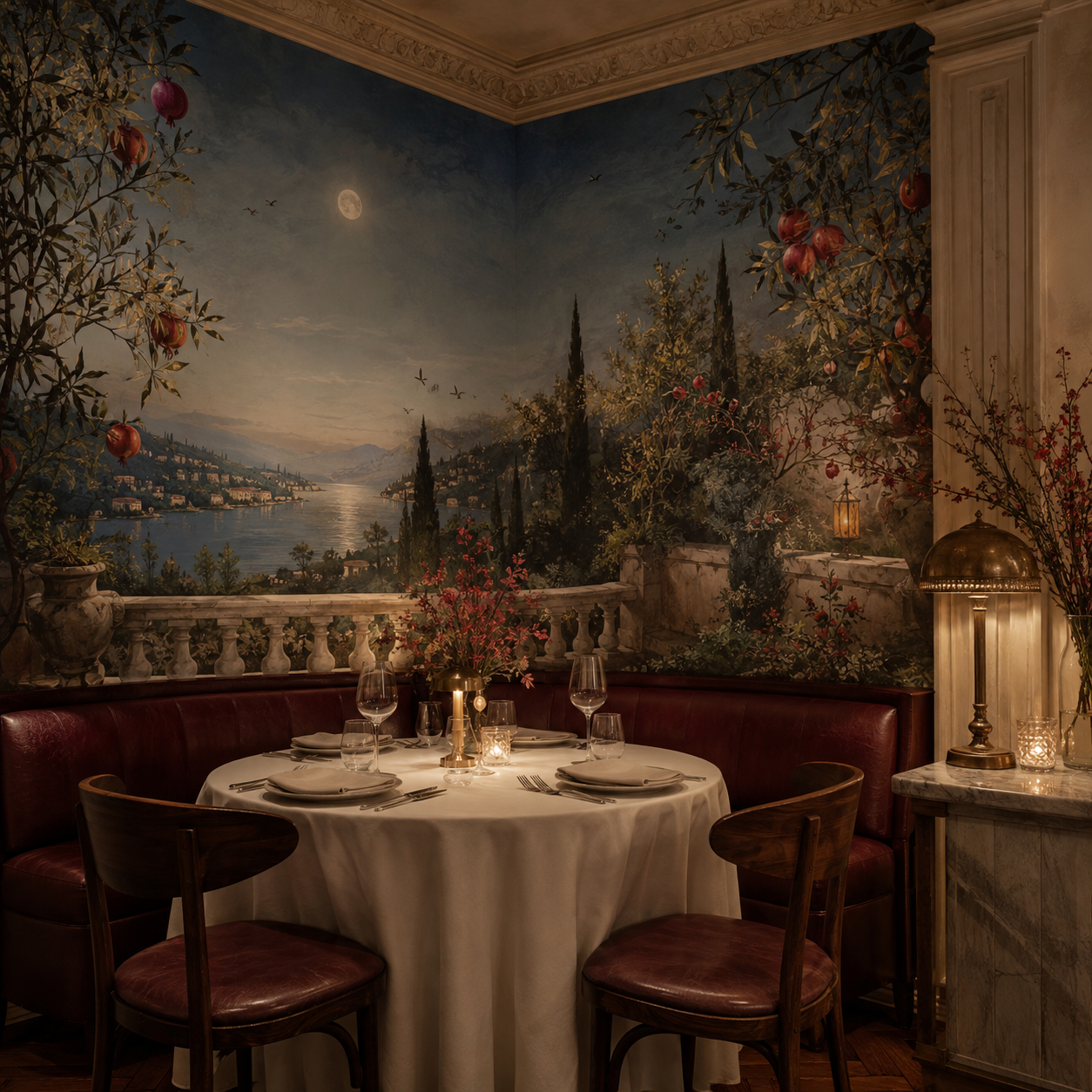
In a world increasingly dominated by fleeting digital images and virtual realities, the handcrafted, permanent illusion of a trompe-l’œil wall mural offers a unique and enduring pleasure. It speaks to our innate love of wonder, our delight in skillful artifice, and our desire to imbue our personal spaces with narrative, wit, and a touch of the unexpected. It is an investment not just in decoration, but in intellectual engagement and timeless style. To choose trompe-l’œil is to embrace a sophisticated game of perception, to celebrate the artist’s ability to transform the ordinary into the extraordinary, and to live daily with a beautiful, artful deception that never ceases to delight the discerning eye and stimulate the mind. It remains, unequivocally, the thinking person’s ultimate statement in wall design.

About the author: Seraphina
Seraphina, an American conservator currently based in London, views luxury wallcoverings through the meticulous lens of her profession. Following a significant tenure within the textile and wallpaper conservation labs of leading American museums, her hands-on experience preserving fragile historical masterpieces granted her an almost forensic understanding of materials, pigments, printing techniques, and the effects of time. Now consulting privately for collectors and heritage properties on preservation strategies, Seraphina operates with the utmost discretion… Read more